
Feel like jumping higher, running faster and being more explosive? Hello to the world of plyometric exercises for athletes. It is the secret weapon that athletes use to improve their game. Plyometric training can put your game on steroids, whether you are a basketball player that wants those slam dunks or a soccer player who wants to run faster or a track athlete that wants to run faster. There are many things that you should know about these effective exercises and how to use them safely and efficiently. Let us investigate everything about them. If you haven’t incorporated plyometric exercises into your routine yet, this is the right time to make it an inseparable part of your fitness.
What Are Plyometric Exercises?
Plyometric exercises may be viewed as jump training or explosive training but it is great for muscle gain. These are motions of maximum force of your muscles in brief intervals. The magic is created by some process known as the stretch-shortening cycle – your muscles stretch so fast and then suddenly, they violently contract. Imagine a rubber band. It has a spring, you pull it out and it shoots. Plyometric training has the same effect on your muscles! This fast stretching and contracting develops explosive power which is directly converted to improved athletic performance. Plyometric exercises for athletes are designed to improve:
- Explosive power and speed
- Jumping ability and vertical leap
- Quick direction changes and agility
- Overall athletic performance
- Muscle strength and coordination
Why Athletes Love Plyometric Training: –
The exciting bit here is that plyometrics exercises will provide the results that cannot be obtained solely through strength training. Whereas normal weightlifting focuses on making your body strong, plyometrics teaches your body how to be fast and explosive with strength.
- Speed and Power: Plyometrics are known to train the fast-twitch muscle fibers, which are involved in explosive movements. It translates to quicker sprinting, increased leaping and mightier motions on the field or the court.
- Improved Reaction Time: These exercises develop your neuromuscular system that is able to communicate more quickly with your brain and the muscles. You will respond faster to the game scenarios and moves of opponents.
- Better Athletic Efficiency: Plyometric exercises enhance the efficiency of your body in burning energy when making explosions. You will work better spending less energy – a combination to win!
- Injury Prevention: Higher-quality muscles, tendons, and ligaments imply the enhanced stability of the joints and lower risks of injuries.
- Sport-Specific Benefits: Plyometrics develop the connective tissues that cushion your body when engaged in severe sporting activities.
Best Plyometric Exercises for Athletes: –
You are going to give a little bang to your exercise plan? The following are the most effective plyometric exercises for athletes that can produce the best outcomes:
- Jump Squats:
The plyometric training is based on jump squats. Begin in squat and then take off as high as possible and land softly in squat position.
Why it’s great: Develops explosive power in the legs that is vital in practically all sports. Enhances vertical jump and general lower body strength.
How to do it: Stand with feet in shoulder position, squat and then jump. Bend down on knees to cushion the landing. Begin with 3 series of 8-10 repetitions. - Box Jumps:
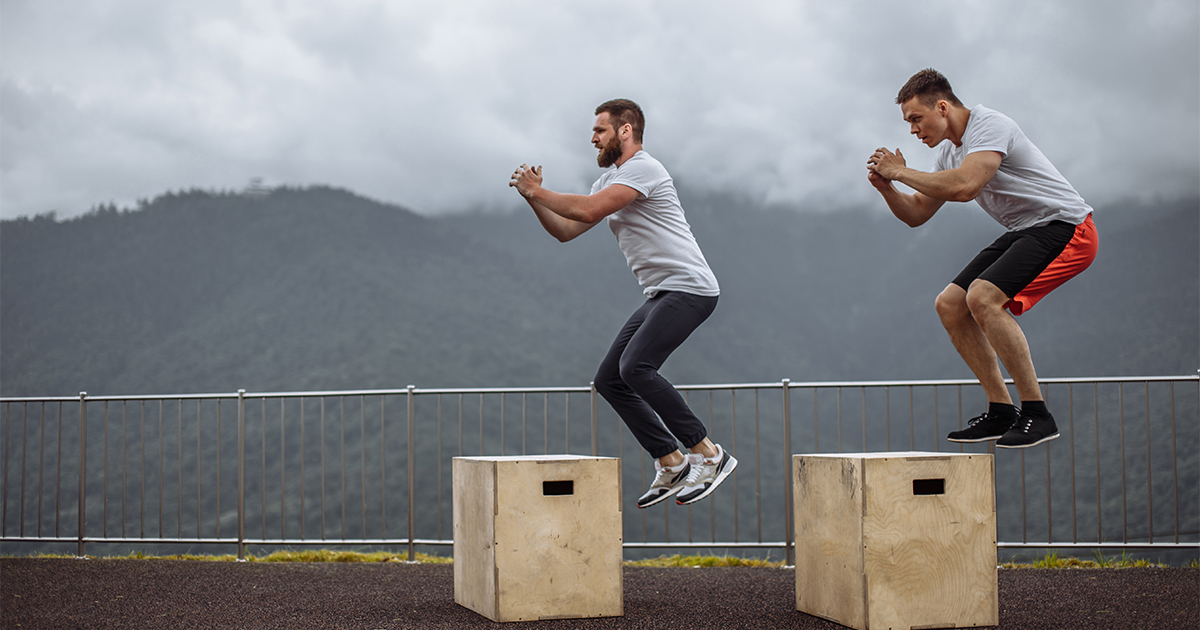
Box jumps entail the act of leaping onto a box or a raised platform when one is standing. It is an activity that is popular among volleyball players and basketball players.
Why it’s great: Learns explosive force and learns the correct landing techniques. Develops confidence and enhances jumping.
How to do it: Stand before a box or platform of solid substance. Stand on the box with both feet and land gently. Keep aside and repeat again. Start with a smaller box height and go upwards. Aim for 3 sets of 6-8 repetitions. - Depth Jumps:
Depth jumps introduce box jumps to a different level. Get out of a box, stand on the ground and jump as high as possible. This is an advanced exercise which maximizes the stretch-shortening cycle.
Why it’s great: Grows to the greatest possible burnt, your body becomes accustomed to respond swiftly after landing.
How to do it: Start with a low box (12-18 inches). Foot fidget, step, jump up. Pay attention to the least amount of ground contact time. This is developed – attempt 2-3 of 5-6 repeats. - Lateral Bounds:
Lateral bounds are used when jumping sideways with one leg to the other. The exercise is ideal when it comes to sports where there is a need to move in different directions with speed such as in soccer, tennis, and basketball.
Why it’s great: Enhances lateral strength, stability and coordination. Tightens stabilizer muscles that are important in injury prevention.
How to do it: Stand on one leg, kick off sideways and kick off on the other side. Take a pause of landing to get your balance, and tie up. Complete 3 blocks of 8-10 bounds on each side. - Burpees:
The best or the worst exercise favored by everyone is a wonderful burpees plyometric movement. Burpees are an integrated squat, push-up and jumping.
Why it’s great: It is a complete body training to develop explosive power with a boost to cardiovascular fitness. Ideal for sportsmen who require energy and stamina.
How to do it:Starting in a standing position, squat, kick your feet back to a push-up stance, push-up, jump your feet again to your hands and jump in the air. Begin with 3 groups of 10-12 repetitions. - Clap Push-Ups:
This plyometric exercise of the upper body requires ejection of the body off the ground enough to allow clapping of the hands before falling.
Why it’s great: Develops explosive strength in the upper body necessary in boxing, martial arts, and throwing sports.
How to do it:Do a push-up but push up with explosives such that your hands do not touch the ground. Snap and fall with curled elbows to cushion the fall. Start with (2-3) of 5-8 repetitions. - Single-Leg Hops:
Similar to unilateral power building, hopping on one leg and forward, backward or laterally is a challenge to your balance.
Why it’s great: Corrects leg strength imbalance and enhances one-leg stability that is essential in running and jumping athletics.
How to do it:Keep on leaping in one leg as long as possible or as long as you can. Development of forward hops to lateral and backward. Try 3 sets of 10-12 hops per leg. - Tuck Jumps:
Jump upwards with the knees pulled into the chest. This activity involves much explosive force and bodily power.
Why it’s great:Grows peak vertical strength and centrality at the same time.
How to do it: Leap forward and fold the knees up against the chest and fall to the ground. Concentrate on height and not speed. Perform 3 sets of 6-8 repetitions.
Plyometric Exercises for Young Athletes: –
If you’re working with younger athletes, it’s crucial to approach plyometric training carefully and appropriately. Plyometric exercises for young athletes should focus on proper technique and gradual progression.
- Age-Appropriate Guidelines:
Ages 8-12: Focus on basic jumping, hopping, and skipping exercises. Keep intensity low and emphasize fun, game-like activities. Simple exercises like jump rope, hopscotch, and basic squat jumps work great.
Ages 13-15: Introduce more structured plyometric exercises with proper supervision. Box jumps (low height), basic bounds, and controlled depth jumps are appropriate. Focus heavily on landing technique.
Ages 16+: Progress to more advanced plyometric exercises with higher intensity and volume. Athletes can handle more complex movements and higher boxes. - Safety First for Young Athletes:
Young athletes have developing bodies that require special care. Here are essential safety considerations:
Master the Basics: Before adding plyometrics, young athletes should have a solid foundation of strength and movement patterns. They should be able to perform bodyweight squats and lunges with perfect form.
Start Low, Progress Slow: Begin with low-intensity exercises and gradually increase difficulty over weeks and months, not days.
Quality Over Quantity: Keep volume low for young athletes. Focus on perfect technique rather than high repetitions. Better to do 5 perfect box jumps than 20 sloppy ones.
Adequate Rest: Young bodies need more recovery time. Allow 48-72 hours between plyometric sessions.
Proper Supervision: Always have qualified coaches supervising young athletes during plyometric training. Proper technique prevents injuries.
How to Incorporate Plyometrics Into Your Training: –
Now that you know the best plyometric exercises for athletes, let’s talk about programming. Here’s how to add these explosive movements to your training routine effectively:
- Frequency and Volume:
Beginners: Start with 2 sessions per week with at least 48 hours between sessions. Keep total jumps under 100 per session.
Intermediate Athletes: Progress to 2-3 sessions weekly with 100-150 total jumps per session.
Advanced Athletes: Can handle 3-4 sessions weekly with up to 200 jumps per session, depending on the intensity level. - Perfect Timing:
Perform plyometric exercises early in your workout when you’re fresh. These exercises require maximum energy and focus. Never do high-intensity plyometrics when fatigued – that’s when injuries happen.
Ideal Workout Structure:
Dynamic warm-up (10 minutes)
Plyometric exercises (15-20 minutes)
Strength training or sport-specific practice
Cool-down and stretching - Rest and Recovery:
Give yourself adequate rest between sets. Plyometrics are about quality and power, not endurance. Rest for:
30-60 seconds between reps for lower intensity exercises
60-90 seconds for moderate intensity
2-3 minutes for high-intensity depth jumps and advanced exercises
Essential Safety Tips: –
Plyometric training is powerful but demands respect. Follow these safety guidelines to maximize benefits while minimizing injury risk:
- Perfect Your Landing: Always land softly with bent knees and hips. Your landing should be quiet – if you’re making loud thuds, you’re landing too hard. Think “land like a cat.”
- Choose Proper Surfaces: Train on appropriate surfaces like rubber gym floors, grass, or specialized plyometric mats. Avoid concrete or extremely hard surfaces that don’t absorb impact.
- Wear Proper Footwear: Invest in quality athletic shoes with good cushioning and ankle support. Your shoes should fit well and be appropriate for your sport.
- Progressive Overload: Increase intensity gradually. Don’t jump to advanced exercises or higher boxes too quickly. Progress when you can perform current exercises with perfect form.
- Listen to Your Body: If something hurts (not just burns), stop. Sharp pain, joint discomfort, or unusual soreness means you need rest. Don’t train through pain.
- Warm Up Properly: Never start plyometrics cold. Spend 10-15 minutes with dynamic stretching, light jogging, and gradually increasing movement intensity.
Common Mistakes to Avoid: –
Even experienced athletes make these plyometric training errors. Avoid them to stay safe and maximize results:
- Landing Stiff-Legged: This puts enormous stress on your knees and joints. Always land with bent knees to absorb impact properly.
- Too Much, Too Soon: Enthusiasm can lead to overtraining. Start conservatively and build gradually over weeks and months.
- Neglecting Technique: Speed and height don’t matter if your form is poor. Perfect technique prevents injuries and builds better results.
- Training When Fatigued: Plyometrics require fresh muscles and sharp mental focus. Never add plyometrics at the end of an exhausting workout.
- Skipping the Warm-Up: Cold muscles are injured muscles. Always warm up thoroughly before explosive training.
Final Thoughts: –
Plyometric exercises for athletes are very useful in the development of explosive power, speed and general athletics. Starting with jump squats and box jumps to more complicated depth jumps and bounds, such exercises can change your game provided that they are performed properly. It is important to keep in mind that optimal plyometric exercises of an athlete involve the use of correct technique, suitable intensity, and solid rest time. Be it the introduction of plyometric exercises to young athletes or the development of a program that involves the more experienced sportsmen, it is always necessary to focus on the safety and gradual improvement. Begin with simple exercises, learn to land correctly and move to more difficult ones step by step. The patience will be paid up with a higher vertical jump, faster sprinting, speedy changes of direction, and enhanced overall performance.