
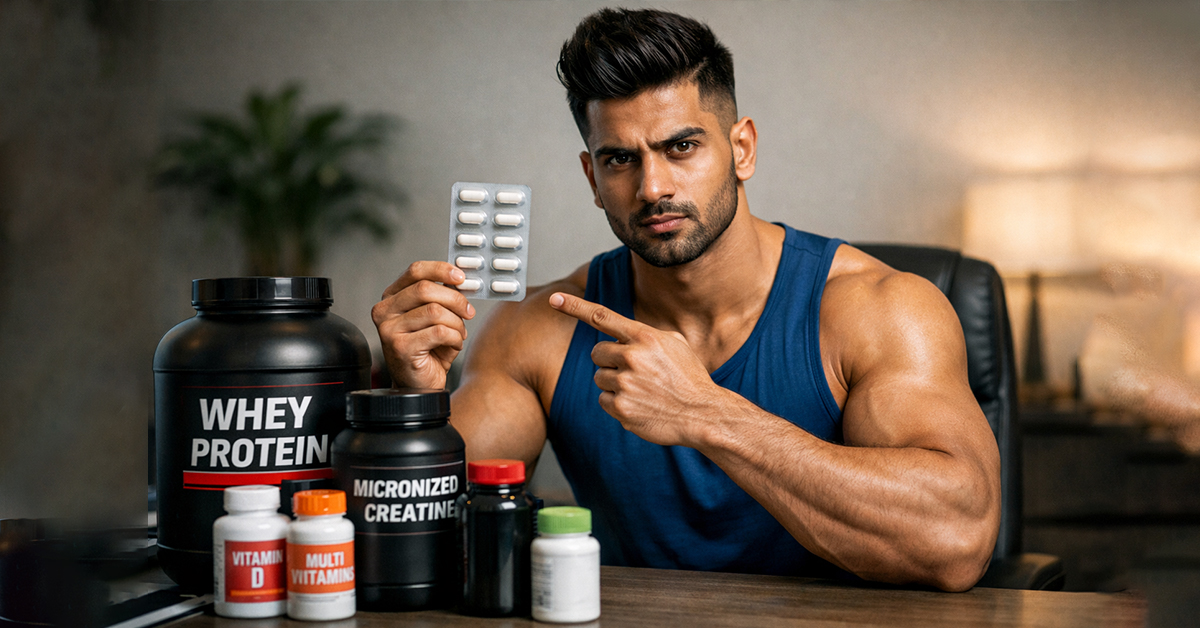
Most beginners should wait 6-12 months of consistent training and proper nutrition before adding supplements. Focus on mastering diet fundamentals first—supplements enhance an already solid foundation, they don’t replace it.
Understanding the Supplement Timeline
The gym supplement industry generates over $50 billion annually, with marketing that often targets complete beginners. But here’s what research and experienced trainers agree on: supplements work best when you’ve already built the basics.
Starting supplements too early is like buying racing fuel for a car that hasn’t learned to drive smoothly. The engine needs tuning first.
Foundation-First Principle
Before considering any supplement, you need three non-negotiables in place:
Consistent Training Routine You should have at least 3-6 months of regular gym attendance with progressive overload. This means you’re tracking workouts, increasing weights gradually, and following a structured program—not just showing up randomly.
Dialed-In Nutrition Your daily protein intake should hit 1.5–2.2 grams per kilogram of body weight You should understand your maintenance calories and be eating accordingly for your goals. If you can’t list what you ate yesterday or estimate your protein intake, supplements won’t help.
Recovery Habits Seven to nine hours of sleep consistently. Proper hydration. Rest days built into your schedule. Recovery is where growth happens—supplements can’t override poor sleep or chronic stress.
Signs You’re Ready for Supplements
You’ve likely built enough foundation when:
- You’ve been training consistently for 6-12 months minimum
- You can accurately track your macros and hit protein goals through food
- You’ve seen measurable progress (strength gains, muscle growth, or fat loss)
- You’ve identified specific gaps that food alone struggles to fill
- You have realistic expectations about what supplements can deliver (typically 5-15% performance enhancement, not transformation)
Beginner-Friendly Supplement Stack; –
If you’ve met the criteria above, here’s the evidence-based starter approach:
Protein Powder (The Only “Essential” Supplement)
When to start: After 3-6 months if you struggle to hit protein targets through whole foods.
Whey protein isn’t magic—it’s just convenient protein. Use it when you need 20-40 grams of protein quickly and food isn’t practical. Most people need 120-200 grams of protein daily depending on body weight and goals.
A 150-pound person aiming for muscle growth needs roughly 120-150 grams daily. If you’re hitting that through chicken, eggs, fish, and legumes consistently, you don’t need powder.
Creatine Monohydrate
When to start: After 6-12 months of consistent training.
Creatine is the most researched supplement in sports science, with over 1,000 studies supporting its safety and effectiveness. It helps with strength, power output, and muscle growth by improving your muscles’ energy systems.
Take 3-5 grams daily, any time of day. There’s no need for loading phases despite what marketing suggests. Effects appear within 2-4 weeks.
Caffeine (Pre-Workout)
When to start: Only after you’ve established training consistency without relying on stimulants.
Caffeine improves focus and performance, but it’s not necessary for progress. If you start depending on pre-workout for motivation, you’re masking a deeper issue—either overtraining, poor sleep, or lack of genuine commitment.
Use strategically for particularly challenging workouts, not as daily fuel.
What Beginners Don’t Need
Despite aggressive marketing, these supplements aren’t worth considering until you’re intermediate or advanced:
BCAAs (Branched-Chain Amino Acids) Completely unnecessary if you’re eating adequate protein. Whole protein contains all essential amino acids, including BCAAs. Save your money.
Testosterone Boosters Natural supplements claiming to boost testosterone rarely work. If you genuinely have low testosterone, see a doctor. Otherwise, focus on sleep, stress management, and proper nutrition.
Fat Burners No supplement burns fat meaningfully. They might slightly increase metabolism or suppress appetite, but sustainable fat loss comes from caloric deficit, not pills.
Mass Gainers Expensive calories. You can make your own high-calorie shake with oats, banana, peanut butter, and protein powder for a fraction of the cost.
Real Question: Why Do You Want Supplements?
Before buying anything, examine your motivation:
Good reasons:
- You’ve calculated your nutritional needs and identified a specific gap
- You want marginal performance improvements after mastering the basics
- You need convenience (protein powder for travel or busy days)
Red flags:
- You think supplements will compensate for inconsistent training
- You’re looking for shortcuts or rapid transformation
- You haven’t committed to proper nutrition yet
- You’re influenced by influencer marketing rather than your actual needs
Age-Specific Considerations
Under 18: Focus entirely on whole foods, proper sleep, and progressive training. Your natural hormone levels are optimized for growth. Protein powder is acceptable if you genuinely can’t meet needs through food, but skip everything else.
18-35: This is the age range where supplements provide the most benefit, assuming training and nutrition foundations exist.
Over 35: Creatine becomes more valuable as natural creatine production decreases. Vitamin D, omega-3s, and protein become increasingly important for recovery and muscle preservation.
Cost-Benefit Reality
A quality protein powder costs $40-60 monthly. Creatine runs $10-15 monthly. That’s $50-75 for the only two supplements most people ever need.
Compare that to the cost of proper nutrition: quality protein sources, vegetables, complex carbs, and healthy fats run $200-400 monthly depending on location. If you’re not investing properly in food first, supplements are wasted money.
Conclusion: –
The supplement industry thrives on impatience and complexity. But progress follows a simpler path: consistent training, adequate protein, caloric balance for your goals, quality sleep, and time.
Most beginners should spend their first 6-12 months perfecting these fundamentals. Once you’ve built that foundation and identified specific, genuine needs that food struggles to meet, protein powder and creatine are sensible additions.
Remember that supplements enhance an already effective program—they don’t create one. The person who trains consistently, eats well, and takes no supplements will always outperform the person who takes every supplement but lacks discipline in training and nutrition.
Start with what matters most. The supplements, if needed, will still be there when you’re ready.
Frequently Asked Questions
Can I take supplements as a complete beginner?
You can, but you shouldn’t expect significant benefits. Beginners make rapid progress from training stimulus alone—your body is hyper-responsive to new exercise. Supplements provide marginal gains (5-15%) that only matter once you’ve maximized the fundamentals. Wait at least 3-6 months before considering even protein powder.
Is protein powder necessary for muscle growth?
No. Protein powder is convenient, not necessary. You can build muscle eating only whole foods if you consistently hit your protein targets (0.7-1g per pound of body weight). Use powder as a tool when whole foods aren’t practical—after workouts, during travel, or when meal prep falls short.
What’s the single most effective gym supplement?
Creatine monohydrate. It’s the most researched, safest, and most consistently effective supplement for strength and muscle growth. Take 3-5 grams daily after you’ve established 6-12 months of consistent training. It costs roughly $15 monthly and actually delivers measurable results.
Do I need pre-workout supplements?
No. Pre-workout is primarily caffeine plus marketing. You can get the same benefits from black coffee for a fraction of the cost. Only consider pre-workout if you’ve been training consistently for several months and want occasional performance enhancement for particularly demanding sessions. Never rely on it for motivation.
How much should I spend on supplements monthly?
Most people never need to spend more than $50-75 monthly. Quality whey protein ($40-60) and creatine monohydrate ($10-15) cover everything evidence-based for general fitness goals. If you’re spending more, you’re likely buying supplements with minimal benefit. Invest the difference in higher-quality food.
When should teenagers start taking supplements?
Teenagers should avoid supplements except protein powder if they genuinely cannot meet protein needs through whole foods. Natural hormone levels during teenage years are already optimized for growth. Focus on consistent training, whole foods, 8-9 hours of sleep, and proper hydration. These provide far greater returns than any supplement.
Can supplements replace poor diet?
Absolutely not. Supplements are called “supplements” because they supplement an already solid nutrition foundation. No amount of protein powder fixes a diet lacking vegetables, healthy fats, complex carbohydrates, and micronutrients. Master your diet first—supplements only enhance what’s already working.
Are expensive supplements better than cheap ones?
Usually no. For protein powder and creatine, you’re paying for quality control and taste, not superior ingredients. Choose products with third-party testing (NSF Certified for Sport, Informed-Choice) to ensure purity. Beyond that, expensive doesn’t mean effective. Creatine monohydrate works identically whether it costs $15 or $50.